|
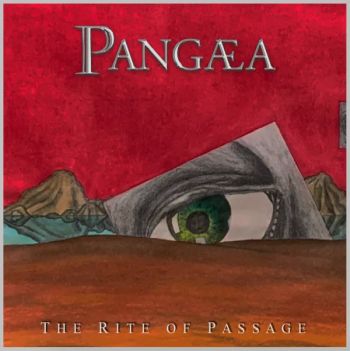
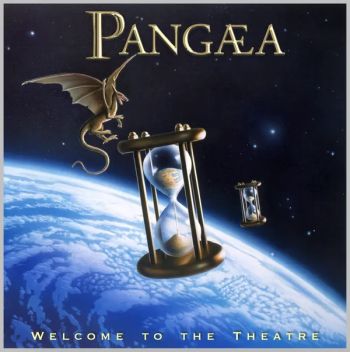
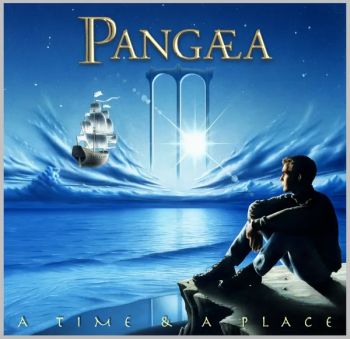
Interview Corey Schenck (Pangaea) "Like all our previous albums Beowulf is just a collection of songs" (February 2025, text by Henri Strik, pictures provided by Pangaea, edited by Peter Willemsen) Pangaea is a band from the USA that released two studio albums in the nineties, namely The Rite Of Passage (1997) and Welcome To The Theatre... (1998) and one in the new millennium called A Time & A Place (2002). Unfortunately, after these releases nothing was ever heard from the band until 2021, when the five members got back together again and rehearsed for the first time in eighteen years. However, thirty years after the formation of the band, the brand-new album Beowulf (see review) can be welcomed and recently, the first three albums have been reissued! Of course, Background Magazine wanted to know what happened in those intervening years and how the new album came about. Corey Schenck (keyboards, guitars and backing vocals) was willing to answer all our questions! Welcome back Pangaea. What was the reason to get back together since you didn't rehearse for eighteen years? How does it feel to be back and why did it take so long to come up with a new album?
You reissued your entire back catalogue. What was the reason for it and were record labels interested to bring them back in stock? "Well, we just wanted to. There were no more physical copies of Welcome To The Theatre... and A Time & A Place, and only very few of The Rite Of Passage. We wanted to press new copies for both merchandise in our store and for merchandise at shows. In doing this, we decided that there should be something different and new with them. So, we had them remastered and added bonus tracks, demos, remixes, and such for the reissues. We didn't reach out to any labels and no labels approached us for this, so we did it on our own label Hargadein Music Group." All three former albums sound strong. It's hard to believe that you didn't become big in the progressive rock scene at the time. Any idea why? "Well, thank you so much for that compliment! Ah, this is the million-dollar question, ha,ha! It's probably a combination of things. Maybe we didn't push it as hard as we could have. Maybe we just went on our hiatus a little too soon. I believe that it all comes down to just timing and luck as well. Who knows, maybe this is our time now. We're all really enjoying playing, recording, writing and just hanging out together again. Probably more than we did the first time around." |
|
|
|
| The Rite Of Passage (1997) | Welcome To The Theatre (1998) | A Time & A Place (2002) |
|
Did the previously released albums have certain themes like concept albums have. For instance, the history of your country and their native people? This can be heard on The White Shaman taken from the Welcome To The Theatre... "We didn't have the intention with any of the first three albums to consider them as concept albums when we wrote and recorded them. They do have longer, connected works of multiple songs telling a single story and sharing musical themes, but not the entire album. So, I would say they are thematic; the themes they have are just what was influencing us as songwriters at the time and thus expressing what it was that we needed to say. Yes, exactly like The White Shaman. Andi wrote that about his experiences when he explored the canyons along the Pecos River in Texas. That song was inspired by an ancient wall painting that he saw when he was there."
"Thanks again. My recollection of that - and I could be off a little bit - is that we were approached to record a cover of a Pink Floyd song for the tribute album Signs Of Life. We were about to head out to Robert Berry's studio in California to record A Time & A Place when we were asked to do this. So, it was fortuitous timing that it happened then. We rehearsed both Time and Wish You Were Here and in the end, we decided on Time. The Pink Floyd song did not have anything to do with the album title. It's just a coincidence in sharing a word. The title, as with our previous albums, came from a lyric in one of the songs, namely Tierra Del Fuego." Were you at the time inspired by Pink Floyd or by other bands in the progressive rock scene? "Pink Floyd was and still is one of our influences, but not the primary one. Among the five of us there is a huge range of influences from prog rock to heavy metal to folk music, country, classical composers, soul and pop. From
After listening to your previous albums, I became aware that the music moved towards a more European neo progressive rock style. Do you agree? "Yes, I do. You're right. As I mentioned before most of our influences came from Europe, especially from England. So, you heard that in our music. At least, most of my own influences can be heard since I wrote many of the songs that made the first three albums. I always gravitated more to British bands than American bands. The Beatles and Led Zeppelin are two more acts that I absolutely love." On the new album, a more American progressive rock style with influences taken from AOR, folk and rock are observable. How did that happen, and do you again agree with me? "Yes, I do agree. Everyone in the band is contributing much more to the writing these days, so there are a lot more influences coming in from all sides now. Even in my own songs like Without You. It may not be considered prog by purists, but it's a song I had to write, that I wanted to write. The interesting elements in that song would be things like the melody, the arrangement, the orchestration, and the key changes. None of us are thinking 'oh wait, this needs an odd meter, this needs to be twenty minutes long, or this needs elves and goblins in it.' However, we do have those elements in some of our songs. We get ideas and we follow the music where it wants to go and how it wants to develop both musically and lyrically. At the same time, songs like Necromancer and Wasape would probably be considered as prog by most listeners. And those songs, too, came about organically, we weren't forcing the music to go anywhere other than where it was leading us." | ||||||||||

| ||||||||||
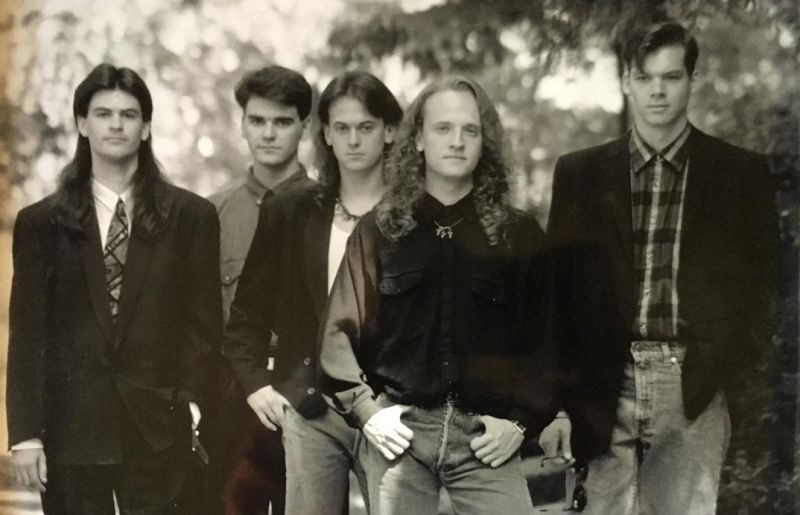
| From L to R: Andi Schenck, Darrell Masingale, Steve Osborn, Corey Schenck & Ron Poulsen | ||||||||||
|
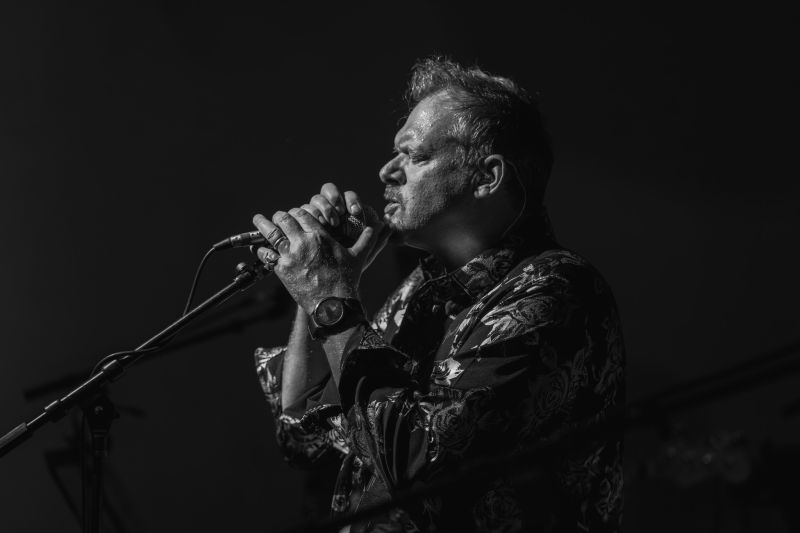
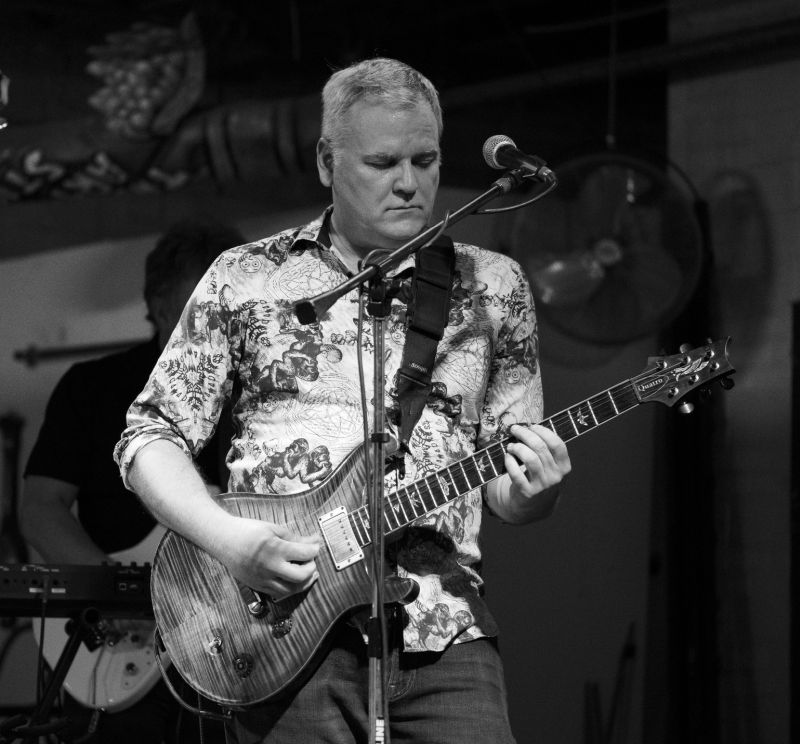
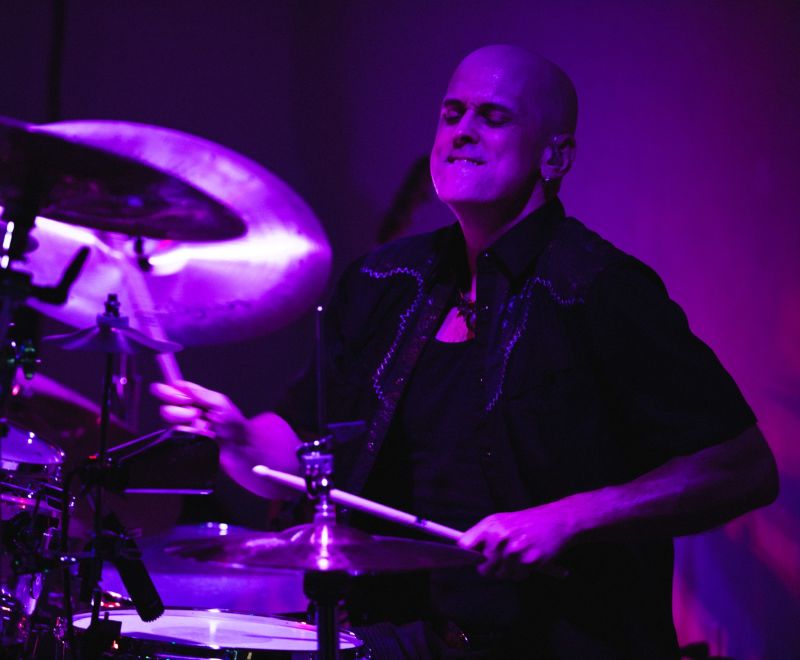
Which bands do influence you nowadays or do the aforementioned acts still inspire you? "For me, it's many of the aforementioned bands. But I have more influences from composers that interest me: those I study, and I've taught in college courses. Alban Berg, Claude Debussy, Béla Bartók, Igor Stravinksy are big influences for me. I know our bassist Ron Poulsen is influenced by bands that may be considered our contemporaries like The Pineapple Thief and Porcupine Tree. Steven Osborn, our guitarist, is really into a great band called Carbon Leaf these days. Andi Schenk, our drummer, likes a lot of soul music and Genesis. The other guitarist Darrell Misingale is into a lot of guitarists like Steve Vai and such. When Scott Draughon joined the band in 2022, he brought a classic metal touch to the band."
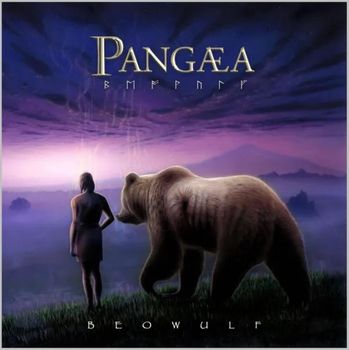
"No, it's not a concept album. Like all our previous albums it's just a collection of songs. They each stand alone and are not connected thematically. Wasape has a strong Native American influence, as does the album cover though." Do we hear the original voices of Native Americans on Wasape? "You're hearing the vocalists in the band. Most of whom have Native American ancestry, so, yes, you are." Would you please tell our readers a bit about the songs separately? "Necromancer, that's a song of mine. It's about searching for my place in this world and the struggle between the natural world of our existence and man's reliance on technology, industry, religion, politics, pollution, and such. I would rather be in a forest or on a mountain than in a city anyway. Show Me The Way is one of Andi's songs. For me, it's meditative, prayer-like. It is searching for a spiritual connection, for something greater than us. When you listen to this song for the first time, you may think that it's about a relationship between two lovers, but it's not. It's much deeper than that. Steve wrote Masquerade. I see it as a song about the illusions we create in this existence and how people keep their head down instead of being open minded and looking for the truth out of fear and uncertainty. He's asking the listener questions, trying to wake them up!
Tomorrow Will Come are mostly my lyrics. It's about people in my life who were dear to me and who have passed away. Everyone in the band has lost loved ones close to them. The song is about accepting that loss and carrying on with life. When you lose someone - especially tragically - you will carry a weight on your shoulders the rest of your life. You have to decide if it is going to weigh you down and hold you back, or if you are going to carry that weight on your shoulders and move forward. The song is about being strong enough to move forward while holding on to their memory. I wrote Without You about a past relationship. A woman I cared about deeply and I'm no longer with. It's a'straight-up' love song. I really like the arrangement and key changes in that one: verse-verse-verse-bridge-solo-chorus-chorus. It's not in the 'normal' order of most pop songs. A Month Of Sundays is a reference to suicide and loss. We are reaching out to get the listener's attention with the performance, so that they may pay closer attention. Several of us in the band have dealt with suicide within our close circle of friends and family. It's very important song for us. Steve and I wrote it together and were very aware of how we were presenting that song."
To me A Month Of Sundays sounds like a demo recorded at a studio during rehearsals. Is it a demo and why did you include soundscapes of fireworks and bells? "It's not a demo. But we used recording techniques in the studio to give it a unique quality - like the antique radio sound. Some parts of the performance were done in one take, and it was improvisatory to achieve that 'unrehearsed' environment. Those sound effects you mentioned are the result of that performance." What was the reason that Robert Berry was again involved in the production of the album. How was it collaborating with him again? "When we reformed in the summer of 2021, we set out to just play live shows again. As the months progressed, we all started bringing in new song ideas and our focus was directed to recording new music again. Once that was decided, we were unanimously and without hesitation agreed that we had to reach out to Robert Berry to produce our music once again. All our experiences with him have been positive and productive. He's like another brother to all of us. We also involved Thom Duell, the vocals engineer, the same studio, the same artist, the same mastering engineer. We kept the whole'team' together again." Why is the playing time of the album only forty minutes, and how long did it take to write and record it? "We knew that we were going to release a vinyl edition. Vinyl only holds 22 minutes of music per side before you lose sound quality, so that was our parameter to work within. Some of the songs were written months before the recording session and others, like Masquerade, was written a week before we flew out to the studio in California. We booked two weeks in the studio and the album was recorded in that time frame. We actually recorded most of our albums in a two-week time span. We seem to work with better precision and focus in a scheduled amount of time."
"For me, I am completely satisfied with the final result. I believe everyone else in the band feels the same way. If we weren't satisfied, we would not have released the album. We made the album we wanted to make." Did you keep some songs on the shelf for a possible next album? "Yes, we did. We had some other complete songs ready to go, and bits and pieces of others when we went out to record. Over the past year, since the album came out in May, we've been writing even more new songs. We now have a lot of new material." As far as I am concerned, the artwork of the album is very beautiful. Who created it and how did you find this person?
Why did you release Tomorrow Will Come as a single and do you expect to hit the charts with this track? "We wanted to reintroduce ourselves with something positive and something that we all had a hand in the writing. It's got a strong, uplifting message about having hope when there is loss. It's also very melodic and has some catchy hooks in it. No, I don't expect it to hit the charts anytime soon, it's not the reason I write songs. But hey, you never know. I wouldn't be upset if it did chart, that's for sure!" What's next and are you planning to tour again? "We have some select shows coming up in the USA and we will be looking to add more to those. We'd love to tour Europe, Asia, and more. But nothing is lined up at the moment. In May, we'll release our next album The Reckoning and playing shows to support it." Thanks for answering my questions, but most of all thanks for getting back into the progressive rock with a great new album! "Well, thank yóu for taking the time to ask great questions! And yes, we are excited to be back, excited to be back together and writing new music." Website bandcamp review album 'Beowulf' |