|
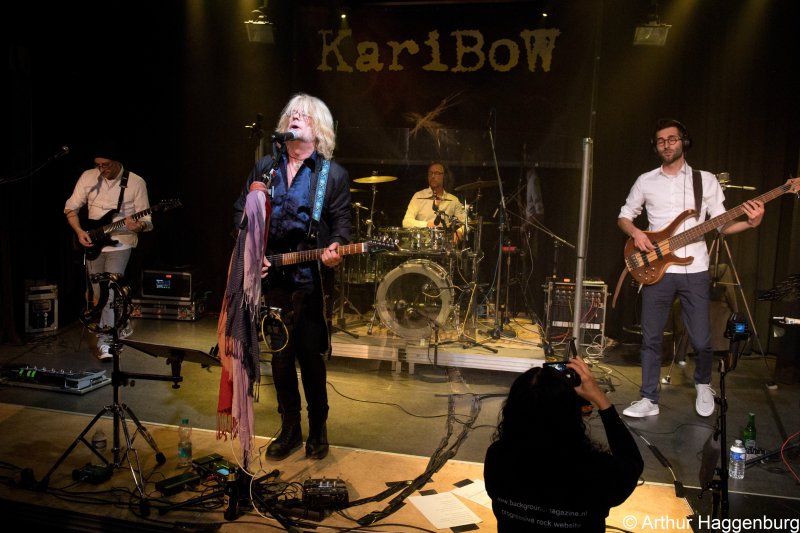
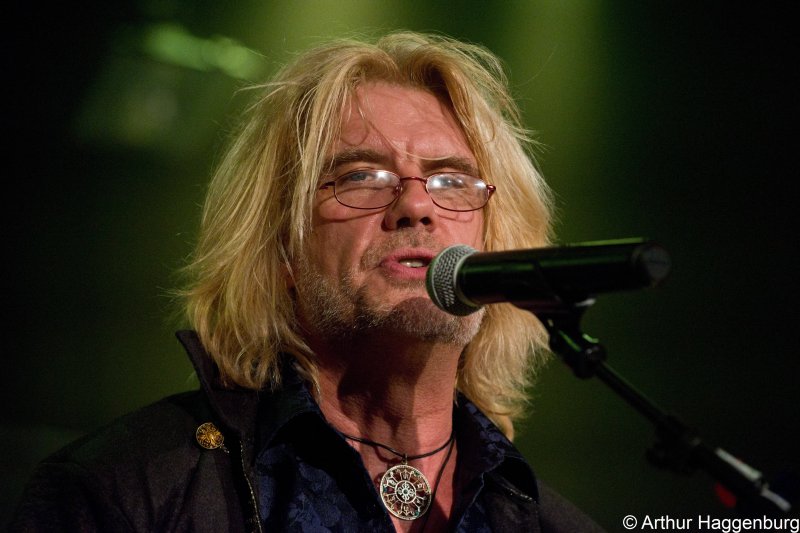
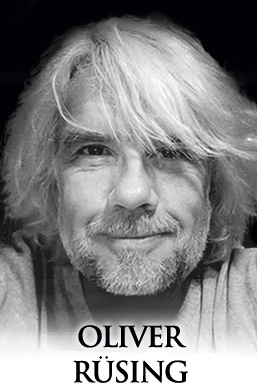
Interview KariBoW (Oliver Rüsing) "Writing music has always been a way for me to turn negative energy into something positive" (June 2025, text by Henri Strik, pictures provided by Oliver Rüsing (unless otherwise noted), edited by Peter Willemsen) Oliver Rüsing and his musical project KariBoW was founded in 1996, so they have a history of almost thirty years. Still there are people in the progressive rock scene who hardly know the band, or they are not familiar with their music. That is why it is about time to introduce this underrated German multi-instrumentalist and his crossover prog band to all readers of Background Magazine. Following his fifteenth (!) great new album PanTerrania, I had a chat with him about this new album and other items that turned out to be interesting. For that reason and more, I advise all readers of this magazine to read the interview below. That also applies to those who have been following the band for years. Would you please introduce yourself to the readers of Background Magazine who are not so familiar with you and your band?
How did you become such an excellent multi-instrumentalist, and when did you learn to play on guitars, drums, bass and keyboards? "Thank you for your appreciation. I started playing drums in a school band back in 1980. We called ourselves Wizard, and being everything but a technically skilled drum wizard at that time, I ruined the heads and cymbals of my first kit within just a few days while trying to sound like the drummer of Motörhead. The drums belonged to the school's collection of instruments, so you can imagine that my music teacher wasn't amused. That was the questionable beginning of my music career, and I obviously had a long way to go... However, I continued playing drums in multiple bands after I had learned how to use the instrument adequately. When I was in my twenties, I eventually became a studio and session drummer, and I also worked as a drum teacher. Around the time I started playing drums, I took guitar lessons for a few years, but I never really enjoyed these lessons. So, I became what you may call a self-taught musician, and up until now my approach to music is rather non-academic. When I later on spent those thirteen years recording my music on my own, learning to play all the instruments became crucial and my motivation was based on a combination of requirement and discipline on one hand and play on instinct and curiosity on the other, maybe accompanied by a little bit of talent. So, learning new playing skills all the time was simply a necessity for me to be able to record the music I had written." |
|
|
|
|
|
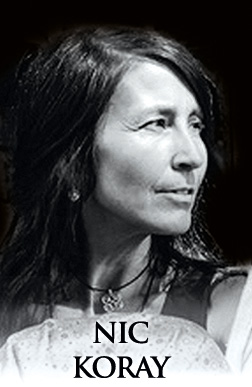
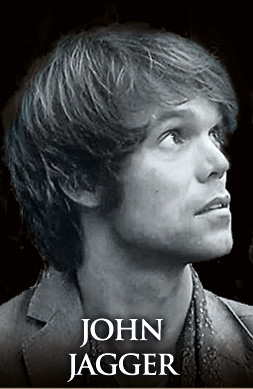
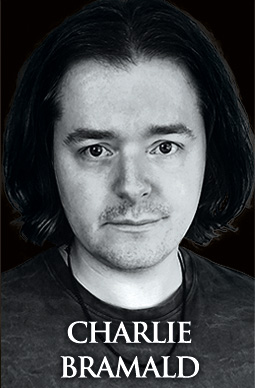
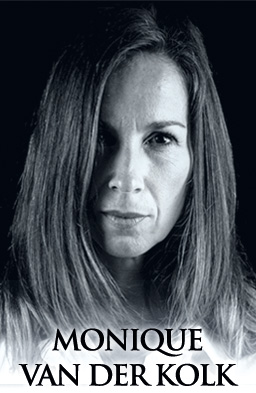
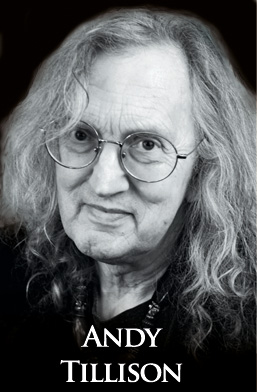
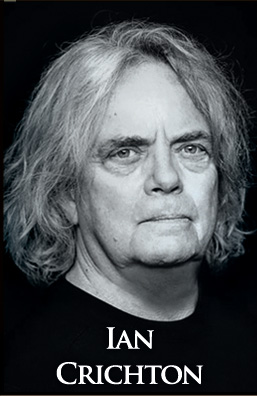
On your debut album Supernatural Foe- Vocalized, released in 1998, you worked as a real band, but on the next albums you started doing more yourself. How did this happen? "Well, as I mentioned before, KariBoW started as a five-piece band. All members were still in their twenties, so a lot of personal decisions were made during that time regarding everybody's private lives, future jobs etcetera. There was a constant change of band members. Even Christoph Kemper - the man behind the famous Kemper amplifiers - was part of KariBoW at times, playing keyboards. He, for example, certainly made the right decision to do his own thing if you look at his successful company. Alongside myself, keyboardist Berthold Fehmer was the last remaining KariBoW band member at the turn of the century and we carried on as a duo for about another year, but in the end, I was the only one who was obviously passionate and crazy enough to continue the project constantly writing and recording all by myself." Later on, you started collaborating with well-known musical guests from the progressive rock scene. Being a multi-instrumentalist you could have easily play all instruments by yourself. Why did you choose guest musicians? "When I started my first collaboration with musical guests in 2016, I had been recording on my own for about fifteen years already, so it was time for some new influences. And even though I hardly ever run out of ideas, there's always a certain danger to stuck in your own bubble if you're working alone for such a long time. So, to me, well-dosed cooperation in art and music became a chance to learn from others and about others' perception to expand my own musical horizon. In addition to that, the first guest I worked with was Michael Sadler (Saga), whose vocals I had always enjoyed since I was fourteen. So, that made it even easier and more tempting to open my rather isolated workflow at that point. Beyond all that, I learned that collaboration with others is a great opportunity to expand your audience because people who are familiar with your own music suddenly take notice of the ones you're working with and the other way around, so in terms of public reach it's obviously a win-win situation for everybody involved." For the new album PanTerrania you collaborated again with many well-known guest musicians like Andy Tillison. How did you get them on the album? "After my collaboration with Michael Sadler in 2016, I worked with Jim Gilmour in 2017 and we also toured with Saga, so it felt quite natural to me to have Ian Crichton on a KariBoW album as well one day. Ian had been familiar with KariBoW for quite a long time, and I'd been familiar with his guitar play for ages, so we both knew what to expect. Therefore, integrating his contribution worked absolutely fluently. Andy Tillison (The Tangent) and Charlie Bramald (Ghost Of The Machine) I messaged on Facebook, and even though we had never met before in person, they were both instantly interested. I think Charlie has a whole KariBoW collection at home and Andy was also familiar with my music since KariBoW has become pretty well known among prog musicians worldwide over the last ten years. With Nic Koray and Monique van der Kolk I had cooperated before, but I had never combined their vocals on one single track like I did this time. I really love both voices and their distinct vibes, and I think our duets on Illusian and Lords Of The Big Shame as well as our vocal trio on Nothing Shall Remain turned out to be wonderful and well-balanced concepts. Adding John Jagger was a bit different because his musical background is more related to the kind of music both his father Chris Jagger and his famous uncle Mick Jagger stand for than to prog rock. His approach is much more 'back to the roots.' I met John after a show he performed in my hometown with the Vargas Blues Band in October 2023, and after having a nice talk I handed him a copy of Holophinium Xtended. After I had written the reggae-like verses for Cupid Calling, I remembered his live performance, and he somehow was the perfect fit for the song. So, I sent him the track. He felt the same, and so we got going." |
|
|
|
|
|
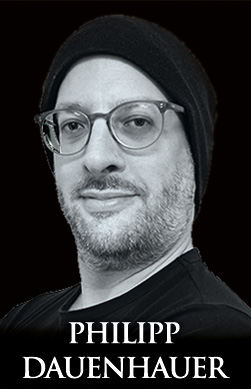
Did they deliver excellent contributions right from the start or must some of them redo the recordings? How big are the influences of the guest singers on the tracks? "Actually, none of them needed to redo anything. However, I did it myself. When I heard John Jagger's vocal tracks for Cupid Calling, they inspired me to redo some parts of my own recordings for the verses, because I enjoyed John's relaxed vibe so much that I wanted to adapt to it. So, I decided to take a new approach myself and I'm quite happy I did. Regarding individual influences, especially guest vocals, I always record a guide vocal track, so there's a melodic guideline and the lyrics. Everything else is up to the contributors." Guitarist Philipp Dauenhauer is the only musician from your live band who also plays on your studio albums. Why did you choose him and not the other musicians of your live band? "Several members of my live band performed on other KariBoW albums as well, so it's always a question of what's actually needed for a specific track depending on who would fit in best or add something inspiring. It's nothing personal at all. but always an artistic decision. Philipp Dauenhauer is a brilliant guitar player either way, even if he wasn't featured on the new album, and that also applies to Felix Jäger (bass) and Sebastian Lindecke (drums). Philipp contributed to other artists' records as well, and Felix and Sebastian both have their own music projects alongside KariBoW." When did you start working on PanTerrania, and how long did it take to complete the album? "Writing music for PanTerrania started about two years ago when I mixed the Holophinium Xtended album. Most of the recordings were done in 2024, so that was the year the major part of PanTerrania was created." I think that PanTerrania is a concept album. Would you please tell me what the title means, and what the concept is all about? "The Greek prefix pan- means 'all' or 'involving all.' Apart from the fact that I was looking for a new album title that had never been used before by anyone, pan- seemed to be the perfect addition to the word Terra or Terrania to outline the fact that everything is connected. However, our world today sadly seems to prove that connection alone isn't enough to guarantee a peaceful coexistence in the life of human beings.
It seems to me that it's not enough to know about this factual, objective connection and the corresponding causes and effects, but to feel it. Without this basic feeling of unity and togetherness, separated feelings allow us to completely fail as humans and even start killing each other, destroying the great gift of life, happiness and all its magic." Why did you release a double album with each disc having a separate title? What is the meaning of both titles? "I wrote enough music for three discs, and PanTerrania is the first completely newly written album since Age Of Amber came out in 2021, so I decided it was worth the effort to put together a double album after more than three years. The first disc called Worlds Of Illusion consists of nine single tracks that all have to do with illusions and how to cope with them. The second disc contains one long suite entitled The Last Illusian, which consists of ten parts. Its subject is rather similar to the first disc. I made up the word Illusian to describe a protagonist who's trying to get along with the fact that some of his dreams and goals eventually turned out to be illusionary ideas." All your albums always have beautiful covers and detailed booklets with many photos and lyrics included. Who creates them? "I do it all myself. I studied art back in the nineties, and later on I gained some digital art experience in the computer game industry working as a 3D graphic designer for Blue Byte, a company you may know from their PC games The Settlers. In 1999, I started teaching art and social science at high school for eighteen years. This professional background may explain why I look at every KariBoW album as a piece of music and art, a total artwork." On the cover of PanTerrania I can see three jars with many different objects inside like a grasshopper, palm trees and even a bass guitar can be seen inside the booklet. What does this all mean? "These jars' you mention feel more like test tubes to me. I picked some clearly recognisable objects like the palm tree or the bass guitar, but also objects that are much harder to define, like that sea-urchin-like shape.
The album is dedicated to your mother Christel Rüsing. How big was the impact when she passed away? Was she an inspiration for you? "My mother's passing had a strong impact on the album in different respects. Firstly, it affected me emotionally of course. And even if we all know these things happen to everyone, the process of learning to live with such a loss is always a very personal struggle you're going through. Secondly, I had to postpone the final production and the release date of PanTerrania because caring for my mother during her last months was most important to me. Luckily, writing music has always been a way for me to turn negative energy into something positive, and so I tried to take those bad feelings as an inspiration, and to keep me from falling into paralysis. I have no idea why it works, but the fact that such a transformation of negativity is even possible is one of the most important insights of my life. Of course it doesn't take away the pain, but the magic happens when you use your suffering to build a 'monument of sound' that's far more beautiful than the pain itself. And so, I wrote the song Heaven." In the booklet I read that you don't like streaming music: streaming destroys the lifeblood of the free professional music culture. Why are you against streaming, and what can we do to avoid it? "Streaming feels like legal robbery, especially if you don't belong to the upper five percent who can afford to give away their music practically for free, because they are making millions by selling merchandise. That's why I stopped releasing our music on streaming platforms like Spotify back in 2019. Music for me has always had a visible and a tangible aspect to it as well, therefore the rather opulent outward appearance of all KariBoW digipaks you mentioned earlier. I know that most fans enjoy holding booklets in their hands, open six or eight panel digipaks, read the lyrics while they're listening or look at background images. You don't get any of that when you're streaming music. You don't even own the music, but you pay for the service the streaming platform provides and, most importantly, you don't even get close to paying the artists adequately for their art, their work and their effort. I will give you an example: it takes streaming one complete KariBoW album three times a day for a year to match the financial benefit of one single digipak sold. That's an extremely lopsided and unfair relation in my eyes, and most people don't even know about it. That's why I keep mentioning it, keep talking about it, keep posting it. Telling people is the least we could do. However, my main advice is to support artists by buying directly from www.karibowshop.com in our case. Not only does it provide the best benefit to the musicians, but it's also one of the most personal connections you can establish between fan and artist. For example, we usually add something individual like a hand-signed, personalised autograph card, to every web shop order that comes in. Spotify and Apple could never do that for you." Can you make a living with your music, or do you have other sources of income? "Writing and producing music has become my main occupation over the years. It's not an easy thing to do and I'm aware that making a living from your own art has become very rare in today's music world. The main reason why it works for me is that I'm doing ninety-five percent of the work by myself, so I don't need to share my income with other artists, writers, graphic designers, publishers, distribution managers, labels, etcetera. KariBoW literally takes seven days a week, but that's fine for me because it's my passion. I'm also lucky enough to say that the worldwide fanbase is extremely loyal and the majority of them are still ordering physical CDs from the official web shop instead of buying digital. Furthermore, there's something I use to call the KariBoW-effect, which means there's a ninety percent probability that someone who has just discovered KariBoW and orders an album, will order all other releases as well within just a few months. And that's when all those years I spent in the studio producing album after album pays off, even if we don't perform live as much as many other bands." Do you intend to perform the new album on stage? "Of course we'll perform live again in the future. Most likely we'll only play selected PanTerrania tracks, because there are so many other older songs appreciated by the fans as well." And what are your next plans for the near future? "We're currently making live plans for 2026, and if we can make anything happen in the second half of 2025, I'll definitely take that opportunity. Regarding future plans, there will be another KariBoW studio release in the last quarter of 2025. It's a completely new approach. I don't want to reveal too much at this point, but what I can say is that this forthcoming album will emerge from sources nobody's ever heard of. It will be music by KariBoW from beyond KariBoW..." Thank you Oliver for answering all my questions! "It was my pleasure, thank you!" More info about KariBoW on the Internet: Website bandcamp review album 'Addicted' (2014) review album 'Holophinium' (2016) review album 'From Here To The Impossible' (2017) review album 'Supernatural Foe Rebirth' (2019) review album 'Three Times Deeper' (2020) review album 'Essence' (2020) review album 'PanTerrania' (2025) review concert 30-Jun-2019 review concert 01-May-2022 |