|
Interview Johnny Maz (Code 18) "Music is the sound of emotions. No emotions is equal to no music for me" (text by Henri Strik, edited by Peter Willemsen, pictures supplied by Johnny Maz)
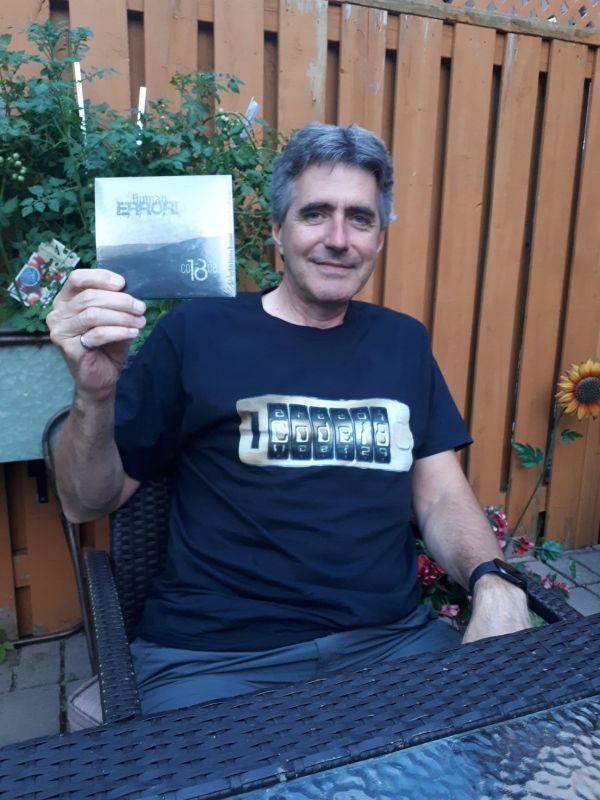
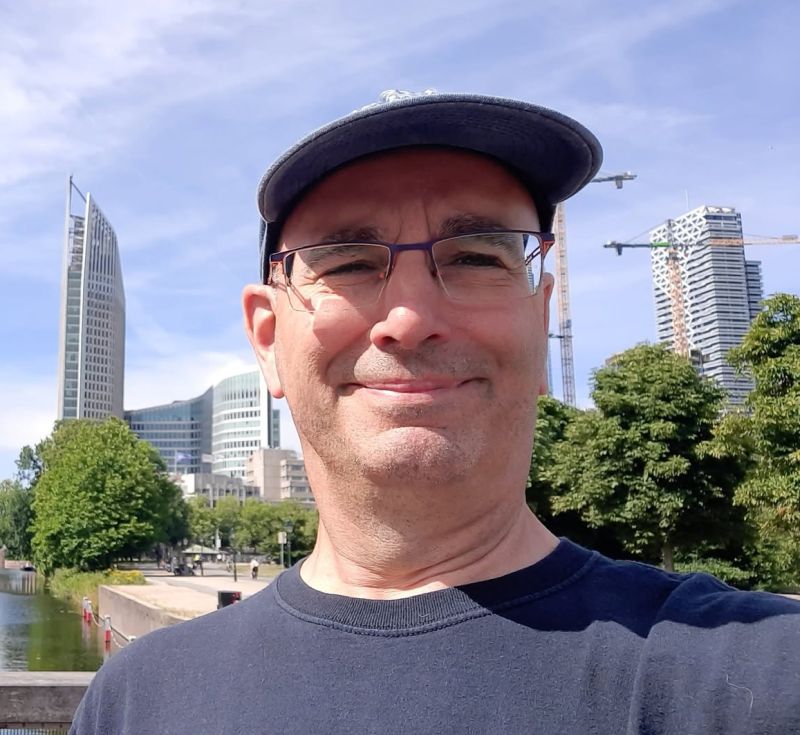
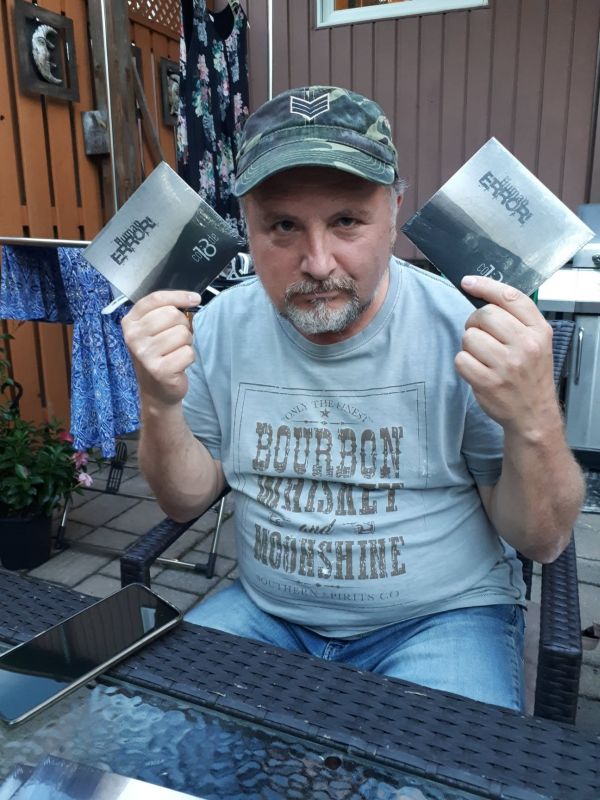
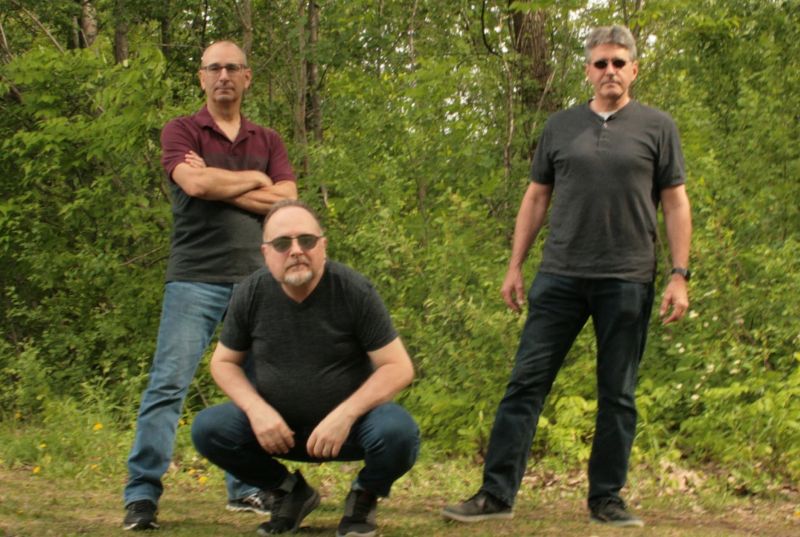
Code 18 is a Canadian act from the Outaouais region southwest of Québec. The band was founded in 2008 by keyboardist Johnny Maz, who is well-known for his work with the Canadian prog band Huis. Unlike Huis, the music of Code 18 is very eclectic and contains a mix of jazz, rock, hard rock, industrial music, electronic music, classical music and classic progressive rock with modern and cinematic influences. So far, Code 18 released two albums: Human Error! (2020) and the brand-new album Two Places. The band is less well-known and appreciated than Huis, but musically just as interesting. Therefore Code 18 deserves more attention than it currently receives. That is why the editorial staff of Background Magazine thinks that it is time to put them in the spotlights. So, we asked band leader Johnny Maz to tell us a bit about their two albums. During the interview he received some support from guitarist JF Rémillard. Before we talk about your albums, would you please introduce the musicians of Code 18? "I've been writing music for quite a while, and when the technology allowed me to record my ideas, I decided it was time. I needed talented and skilful musicians to join me in this adventure, so I asked my friend
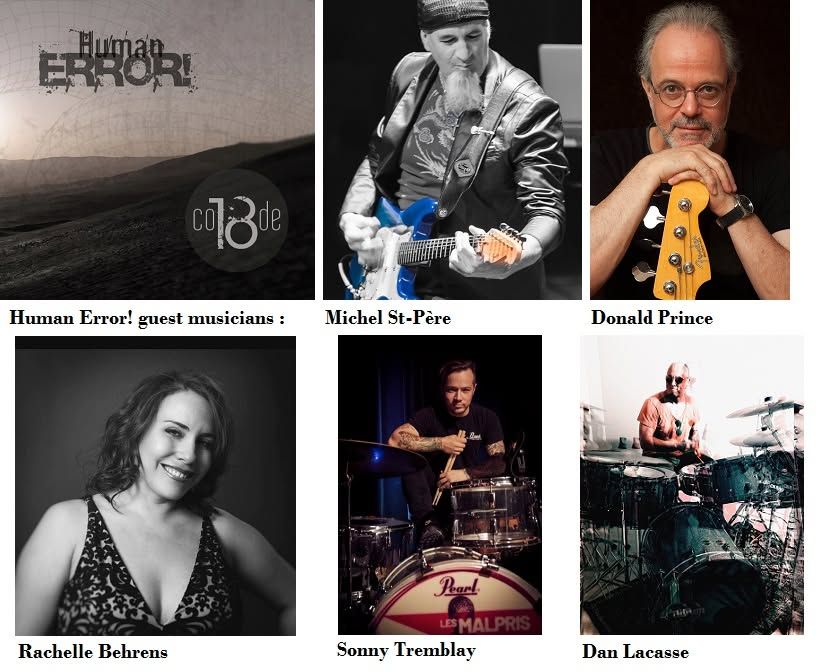
Why did you choose the name Code 18 and what does it mean? "In the support world of IT, a code 18 occurs when the problem is at 18 inches from the screen, and I thought it was really funny. " Who created the sci-fi logo of the band name? "In addition to being a great drummer, Dan Lacasse is a professional media designer. He proposed to modernize the Code 18 logo and look for the first album during a recording session. The original logo, a padlock of a briefcase, was created in 2016 for the demo by a local artist." How do you look back at your debut album Human Error! Did it become the success you wanted it to be? "I was quite pleased with the positive reviews and the very acceptable reception. I still listen to it from time to time and think it's an outstanding album with great musical ideas." It is a great album indeed! What is the concept of Human Error!, and who wrote the story? "I believe it was in 2005 when my wife and I read an article in McClean's Magazine called 'America is thirsty'. Some American politicians wanted to build a water pipeline to drain the Great Lakes to bring water to the southwestern states who were having a water crisis. The article also touched on the dangers and ecological consequences this action would have. It was also pointed out that, as a water-rich nation, Canada is responsible for wasting the resource. Our discussion sparked the idea of two nations fighting for this blue treasure." You asked guest musicians like Sonny Tremblay and Dan Lacasse on drums, Donald Prince on bass, and singer Rachelle Behrens. Who are these people, how did you get them? "All these musicians collaborated with me on various projects over the years, so it was a no brainer to propose parts I thought they would enjoy doing. I met Sonny Tremblay through a mutual friend, and we jammed a couple of times together. Dan Lacasse and Donald Prince played together a long time ago in Spyral Jones, and I joined in the reboot of the band. Rachelle Behrens and I played together in a classic rock cover band, and I thought her voice would fit perfectly on Bedtime Story. They were all pleased to collaborate." | ||
| ||
|
Michel St-Père did an amazing guitar solo on Drought. Did he come up with this solo himself?
"When I wrote Drought, it was clear that I wanted a great guitar solo in the final section. JF gave me the green light to have Michel St-Père play the solo. Michel agreed and came up with the solo himself." Underlude III starts with an impressive church organ intro. A real church organ or was it done by a synthesizer? "I did regularly play the organ in a church when I was younger, and I wish I still had access to it. However, I now have several synths like the Roland, Korg and Yamaha, and I can tell you that the Yamaha sound for a church organ is remarkably close to a real one."
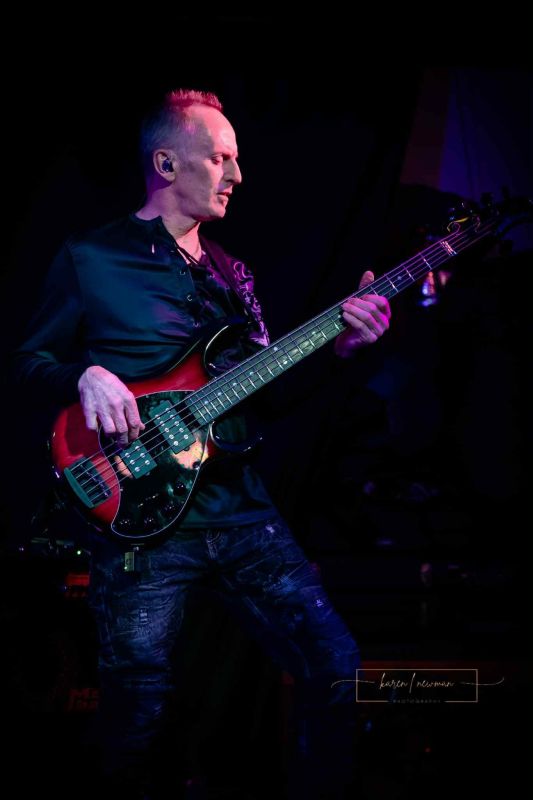
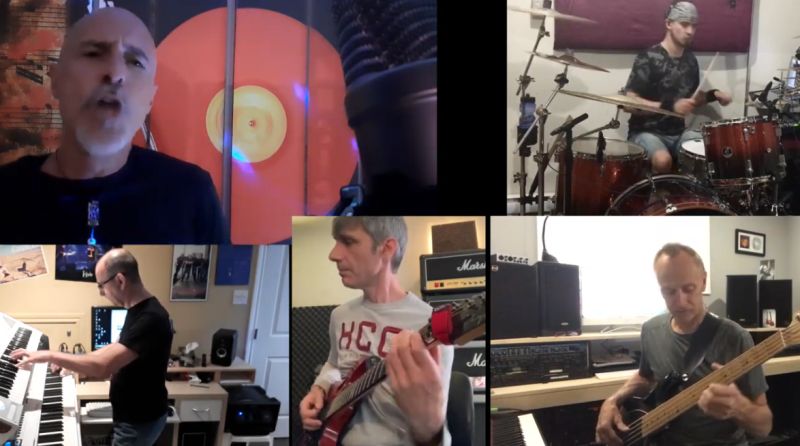
"Music is the sound of emotions! No emotions is equal to no music for me. It's boring if you make music without emotions. Telling a story in progressive rock is important. I always try to tell a relevant story by reproducing the emotions one goes through. It creates a bond between the composer, the story and the listeners." When did you start working on Two Places? "I started working in 2024, shortly after an adventure my wife went through. It took me only two weeks to compose most of it." What exactly is Two Places about? "It's about the adventures of selling a little old house and realizing you are dealing with an incompetent real estate agent. It deals with the state of mind you have when navigating the justice system. It's also about my relationship with my handicapped sister during my teenage search for identity." This time you hardly used guest musicians. Why not? "Drummer Martin Plante was an obvious choice since I play with him in Huis. Bassist Bobby St-Louis started out as a guest musician, but he eventually joined the group. My friend Dan Lacasse had the deep rambling voice I needed for the old detective. In 2020 when the pandemic hit, I was looking for projects, as there were no more live gigs. So, I started these Online Collaboration videos on YouTube called 'Johnny Maz and Friends'. I knew some drummers who had a home studio, several guitar players and a couple of good bass players. With time, mainly based on availability, Martin and Bobby became my 'go to' musician friends for that project, with François Meg on guitars. Our first video was Reality Dream III by Riverside. Then we did Blackest Eyes by Porcupine Tree, On The Loose by Saga, Kyrie' by Mr. Mister, and so on... When the time came to record Two Places, it was natural to ask the friends with whom I'd been working with the last three, four years." |
|
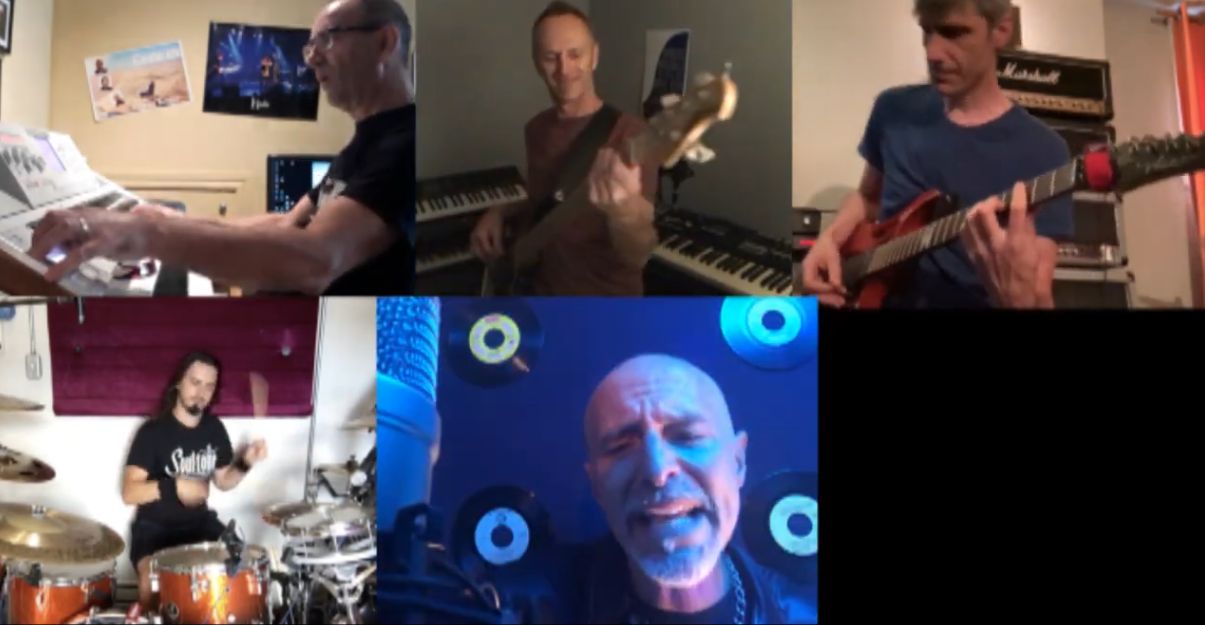
|
| Johnny Maz & Friends - On The Loose (Saga-cover) | Johnny Maz & Friends - Kyrie by Mr. Mister |
|
Why did you let Sylvain Descôteaux do the vocals on Prélude? "I'm not sure why. Sometimes, it's just a question of timing. When I was ready to record the vocals on Prelude, I think Benoit was not available at that time. So, I asked Sylvain Descôteaux, because it's so easy working with him, and he's very talented." I have a specific question for JF. On Prélude, and on some other compositions, you sometimes sound like David Gilmour. Has this great guitar player influenced you?
Polyrhythm is a good example of the threat in the music. Close to despair, so to speak. How difficult is it to create that sense of menace in the music? "As I told you in a previous question, it's about my relationship with my sister when I was a teenager. Polyrhythm is all about that, and how I felt in my head during my teenage crisis with all those hormones going on. It was not an enjoyable time, and it was not difficult to put that in music. It's raw emotions." The Old House sounds amazing with atmospheric and menacing music. How did you manage this? "I wrote some music ideas for this song, and I sent them to Ben along with the lyrics. After some time, he said to me: 'Johnny, do you mind if I write this one?' And I said: sure! I was happy that Ben wanted to contribute by writing a song. He sent me the first part, and I wrote the second part using the same chord pattern he did. JF added all the guitar parts, so this piece is really a band effort." Alors Je Cherche sometimes sounds like the theme song of the TV series Peter Gunn. Do you agree? Was it done on purpose or did it happen by accident? "It was totally done on purpose. It's a tribute to that theme, in addition to James Bond and Dick Tracy. It's also an homage to film noir genre." Why does Alors Je Cherche have a French song title, and why did Daniel Lacasse sing - or rather - speak this song in French? "Code 18 is from Québec. We all speak French, and I'm often asked why we don't write songs in French. That is my answer to your question. I wanted to say: hey!, we speak French here. However, it's not in proper French, but in 'Québec French'. Not that 'Québec French' isn't proper, but Daniel's narration is done with a Québec accent."
"This song is the centre of the 'adventure' about which I was talking. It's a song consisting of three parts. The lovers are my wife and I, the incompetent is the real-estate agent, and the asshole is the buyer who caused all the problems. Each section shows the emotions I'm going through when I think about them." On Moving In A Peach Nightmare, the band sound like a mix of Tangerine Dream and Howard Jones. Are those all musical influences? "Yes, indeed. Tangerine Dream and Jean-Michel Jarre are big influences. I love the album Stratosphere by Tangerine Dream, and I wanted to do a little tribute to that kind of electronic music." A New Soul sometimes sounds like Deep Purple. Even Jon Lord could have done the organ solo. A musical influence as well? "Of course, John Lord is. And a big one! I grew up with Emerson, Lake & Palmer, and Deep Purple. I also played in a Deep Purple tribute band some years ago, and I did a tribute video on YouTube called Deep Purple medley - tribute to John Lord. Click to view.' At the beginning of Justice, it seems that somebody is playing the saxophone, but that is not mentioned in the credits. Did you do this on a synthesizer? "Well, I wanted a real saxophone, but unfortunately my friend Mario, who is a saxophone player with some of my other projects, wasn't available at the time. So yes, I did it with a synthesizer." This song ends with a great climax. Does this mean that the story has a happy ending, or is something unexpected still going to happen at the end like you often see at the end of a movie? "The synth solo theme starts in a minor scale, then goes to a major scale after a 'diminished' transition. If you want to see this as a happy ending, you may do so, because it's always up to the listener to decide."
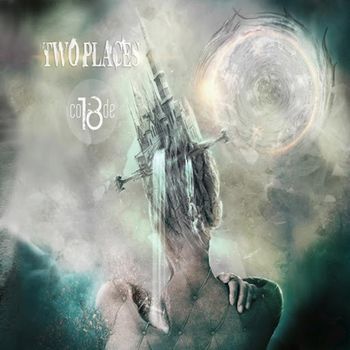
"When an album comes close to being published, you start looking for artwork, browsing on the internet. I found an image that appealed to me, an image with emotions. I contacted Serge Dailly, the French artist. I asked for a few modifications to his original artwork. Adding a portal was important to me, as it represents the 'other place' where we want to go." Did the album turn out the way you were hoping for, or did you realize afterwards that some things could have been done better or differently? "When I put all the songs together to build the story, I was really happy with the result. Before then, I had some doubts: is it perhaps too diverse? Is it too different from the first album? But when I listened to the finished product, I was actually surprised how well everything fit together. For this album I like to say that the whole is more than the sum of its parts." On both albums you created a sound which sometimes sounds like a soundtrack. Have you ever thought of writing a film score, or a film script? "How nice to say that the album sometimes sounds like a soundtrack! Maybe it has to do with the fact that I'm telling a story. It's the nature of a concept album I suppose. However, I would really like to write a soundtrack for a movie one day. It's a lot more lucrative than selling albums."
"Yes, I agree! I always want to incorporate the right style of music for what I have to say at a certain point in the story. JF's style of guitar playing really helps in the jazz department. The other styles you mentioned have been big influences since... well, forever! You can add industrial music to the list because bands like Nine Inch Nails and Rammstein are also an inspiration. If I had to pick only one style, I would say progressive rock. I really love old bands like Emerson, Lake & Palmer, Triumvirat, Genesis, Gentle Giant, and King Crimson, but also rather new bands like Porcupine Tree, Riverside, IQ, Arena and many more." Are you going to perform the entire album in front of a live audience? "Not the whole album, but a substantial chunk of it, yes, alongside a selection of songs from the first album, and some covers that we really like. We're going to do a series of concerts in Gatineau, Montréal and Québec City in the fall." Is it difficult to choose between Huis or Code 18 when you have written a new composition? "No, it's not difficult at all. When I write music for Code 18, it's for a concept album, a story. I don't write much for Huis. Sylvain Descôteaux and Michel Joncas are the driving forces in writing for Huis. Michel St-Père contributes one song per album so far, and I contributed Chasing Morning Glory on the album Abandoned. However, I have written solos on every album since I've joined. When inspiration hits, I write, develop the idea for some time. In my opinion Huis operates more in the neo-prog style then Code 18." What's next for the band? "Our live shows in the fall of 2026, hopefully more shows in 2027, and of course, more albums. I already wrote some songs for our next album: think of Tarkus versus Three Headed Dragon." Thank you for answering my questions, and success with the new album! "Thanks. You're welcome." Website myspace review album 'Two Places' |